
The History of Cartier Watches: From Aviation to an Icon of Design
Long before we checked the time on a phone, a watch was an object that combined function, craftsmanship and personal style. Few companies have blended those three ideas as successfully, or as distinctively, as Cartier.
Known around the world for fine jewelry, Cartier also played an important role in the history of the wristwatch. From an early purpose-built men's wristwatch made for an aviator to the Tank, one of the most recognizable watches ever designed, Cartier helped turn the wristwatch into something more than a practical way to tell time. It became an expression of style.
The Beginning of Cartier
The Cartier story began in Paris in 1847, when Louis-François Cartier took over the jewelry workshop where he had trained and established the business that would carry his name.
Cartier remained a family business for generations. Louis-François' son Alfred joined the company, followed by Alfred's sons Louis, Pierre and Jacques, who transformed Cartier from a respected Parisian jeweler into an international name in luxury.
Louis Cartier, in particular, would have a lasting influence on watch design. And one of his friendships would change the way men wore watches.
Alberto Santos-Dumont and the Birth of the Santos
In the early 1900s, Brazilian aviation pioneer Alberto Santos-Dumont faced a practical problem. Checking a pocket watch in flight meant taking a hand off the controls. He mentioned it to his friend Louis Cartier.
In 1904, Cartier created a wristwatch that let the aviator read the time while keeping his hands on the controls. The design became the Santos, one of the earliest purpose-designed wristwatches for men.
Its square case was unusual in a world of round watches, and Cartier turned normally hidden construction details, the screws around the bezel, into part of the design. More than a century later, those details are still immediately recognizable on a Santos de Cartier.
What began as a practical solution for an aviator became one of the enduring designs in luxury watchmaking.
The Cartier Tank
If the Santos established Cartier's place in wristwatch history, the Tank cemented it.
Louis Cartier designed the Tank in 1917. Its geometry was inspired by a military tank seen from above: the case represents the body of the vehicle, and the parallel side rails, or brancards, recall its tracks.

The result was remarkably simple: a rectangular watch with clean lines and Roman numerals, its case flowing naturally into the strap. More than a century later, the basic design is unmistakable, and it has appeared in many interpretations, including the Tank Louis Cartier, Tank Américaine, Tank Française and Tank Must.
That longevity says something important about great design. It doesn't need to change very much.
A Watchmaker With a Jeweler's Eye
Cartier occupies an unusual place among the great luxury watch brands. Names such as Rolex, Patek Philippe and Audemars Piguet are identified first with watchmaking. Cartier began as a jeweler.
That heritage created a different approach. A Cartier watch was never simply a movement placed inside a case. The shape of the case, the proportions of the dial, the bracelet, the crown and even the way the watch sat on the wrist were all treated as parts of a single design.
Certain details became unmistakably Cartier: Roman numerals, blued sword-shaped hands, geometric cases and crowns set with a blue cabochon.
Cartier Watches That Became Icons
- Santos de Cartier: born from Louis Cartier's 1904 solution for Alberto Santos-Dumont.
- Tank: created in 1917 and one of the most enduring rectangular watch designs in history.
- Panthère de Cartier: introduced in the 1980s as both a watch and a piece of jewelry, with an exceptionally fluid bracelet.
- Pasha de Cartier: launched in its modern form in 1985, known for its bold round case and distinctive crown cover.
- Ballon Bleu de Cartier: a more contemporary design built around a rounded case and its signature blue cabochon crown.
Despite their differences, these watches share something rare: they are recognizable without relying on a logo.
The Panthère: Where Jewelry and Watchmaking Meet
The Panthère de Cartier shows, perhaps better than any other model, how Cartier approaches watches differently. Created in the 1980s, it was conceived as both a timepiece and a piece of jewelry, with a supple bracelet that wraps the wrist with the movement and feel of fine jewelry.

The name connects the watch to one of Cartier's longest-running signatures. The panther first appeared as a motif on a Cartier watch in 1914 and eventually became an emblem of the company. For Cartier, the line between watchmaking and jewelry has always been intentionally thin.
Why Cartier Watches Have Endured
Technology has transformed nearly everything about the way we keep track of time. Yet someone wearing a Tank or a Santos today is wearing a design that would have been recognizable generations ago.
That is much of Cartier's appeal. The watches do not depend on being the newest thing. Their value comes from proportion, recognizable design, craftsmanship and history.
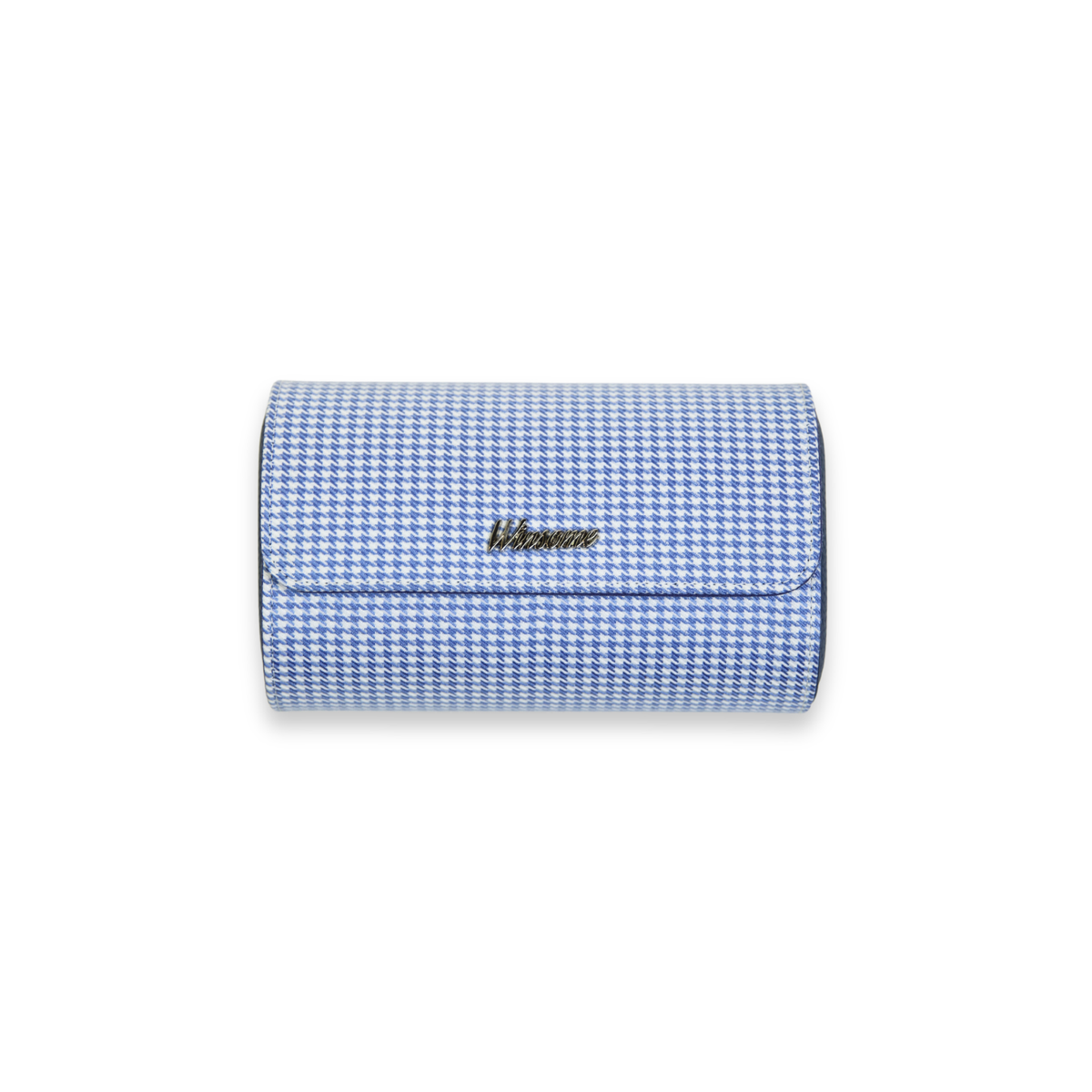
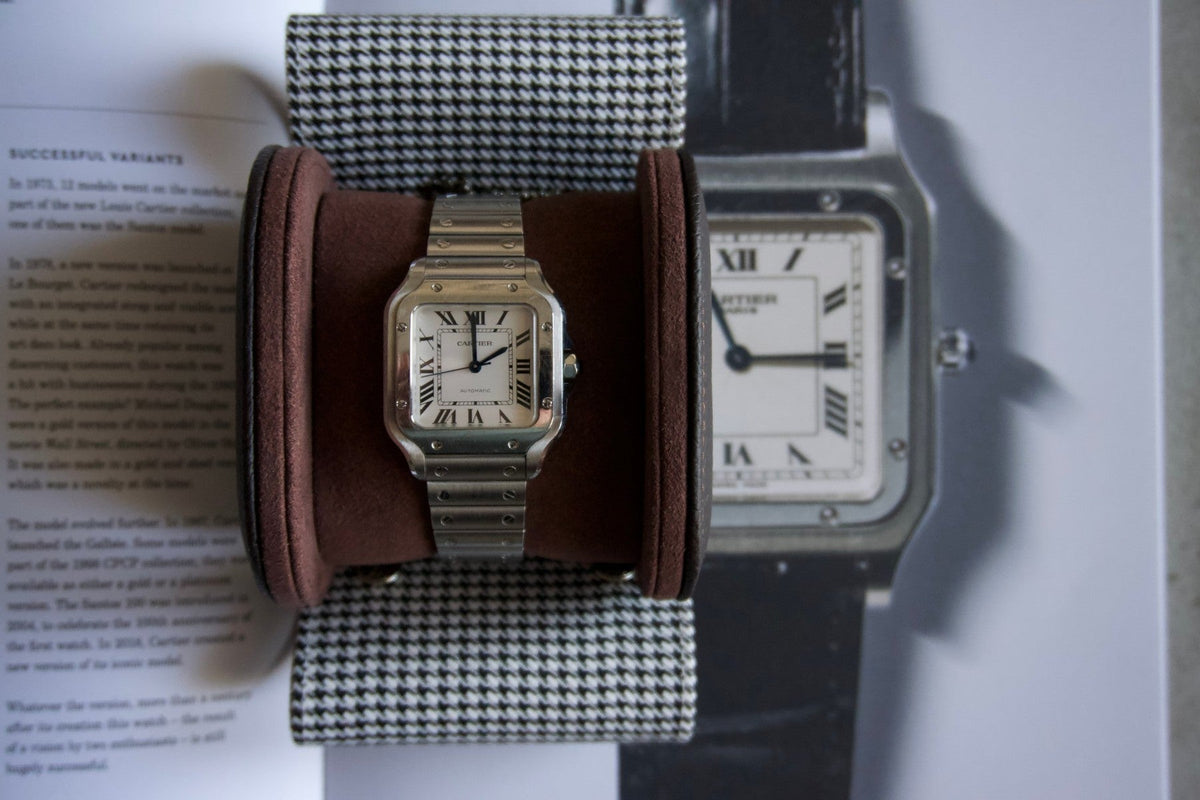
For many owners, a Cartier also represents something personal: a wedding, an anniversary, an accomplishment, an inheritance, or simply a watch chosen because its design felt timeless. Our own daily watch is a stainless steel Santos, and it travels on its own suede pillow in a watch roll, away from the other pieces in the bag.
Because the things worth keeping are usually the things worth taking care of.
Cartier Watch History FAQ
When was Cartier founded?
Cartier was founded in Paris in 1847 by Louis-François Cartier, who took over the workshop where he had trained. His son Alfred and grandsons Louis, Pierre and Jacques later expanded the business internationally.
Who created the Cartier Santos?
Louis Cartier created it in 1904 for his friend, the Brazilian aviator Alberto Santos-Dumont, who wanted to check the time while flying without reaching for a pocket watch.
Was the Cartier Santos the first wristwatch?
No. Wrist-worn watches existed earlier, including the watch Breguet made for the Queen of Naples between 1810 and 1812. The Santos matters because it was one of the earliest purpose-designed wristwatches for men and was highly influential in the development of the modern men's watch.
When was the Cartier Tank created?
Louis Cartier designed the Tank in 1917. Its geometry was inspired by a military tank viewed from above.
What are the most famous Cartier watches?
The Santos and the Tank are Cartier's foundational designs. Other important collections include the Panthère, Pasha and Ballon Bleu.
Is Cartier considered a luxury watchmaker?
Yes. Cartier is both a fine jeweler and an established luxury watchmaker with more than a century of watchmaking heritage. The Santos and Tank are among the most recognizable watches ever made.
How should you protect a Cartier watch when traveling?
A watch roll or watch travel case helps protect a Cartier from scratches and contact with other watches or jewelry. Look for a soft interior, a secure closure and individual cushions. Valuable watches are best kept with you rather than packed in checked luggage.
From the cockpit of Alberto Santos-Dumont's aircraft to the enduring geometry of the Tank, Cartier changed not only how watches were worn, but how they were designed. More than a century later, its most recognizable creations still look unmistakably Cartier.
Continue the series with the history of Patek Philippe, or explore Series I, our handmade watch rolls.
Made for what you value.
Header image: A stainless steel Cartier Santos resting in The Espresso watch roll. Photo: Winsome. Watch photographs are used for editorial purposes; Winsome is not affiliated with the brands discussed.