
Article: Houndstooth, Pepita and Dogstooth: The Story of a Timeless Pattern
Houndstooth, Pepita and Dogstooth: The Story of a Timeless Pattern
Few patterns are recognized as instantly as houndstooth. Its broken checks read as classic and a little rebellious at the same time, which may be why it has moved so easily between shepherds' coats, couture runways and the interiors of sports cars. It is also why we chose it for Winsome’s Series I release.
What Is Houndstooth?
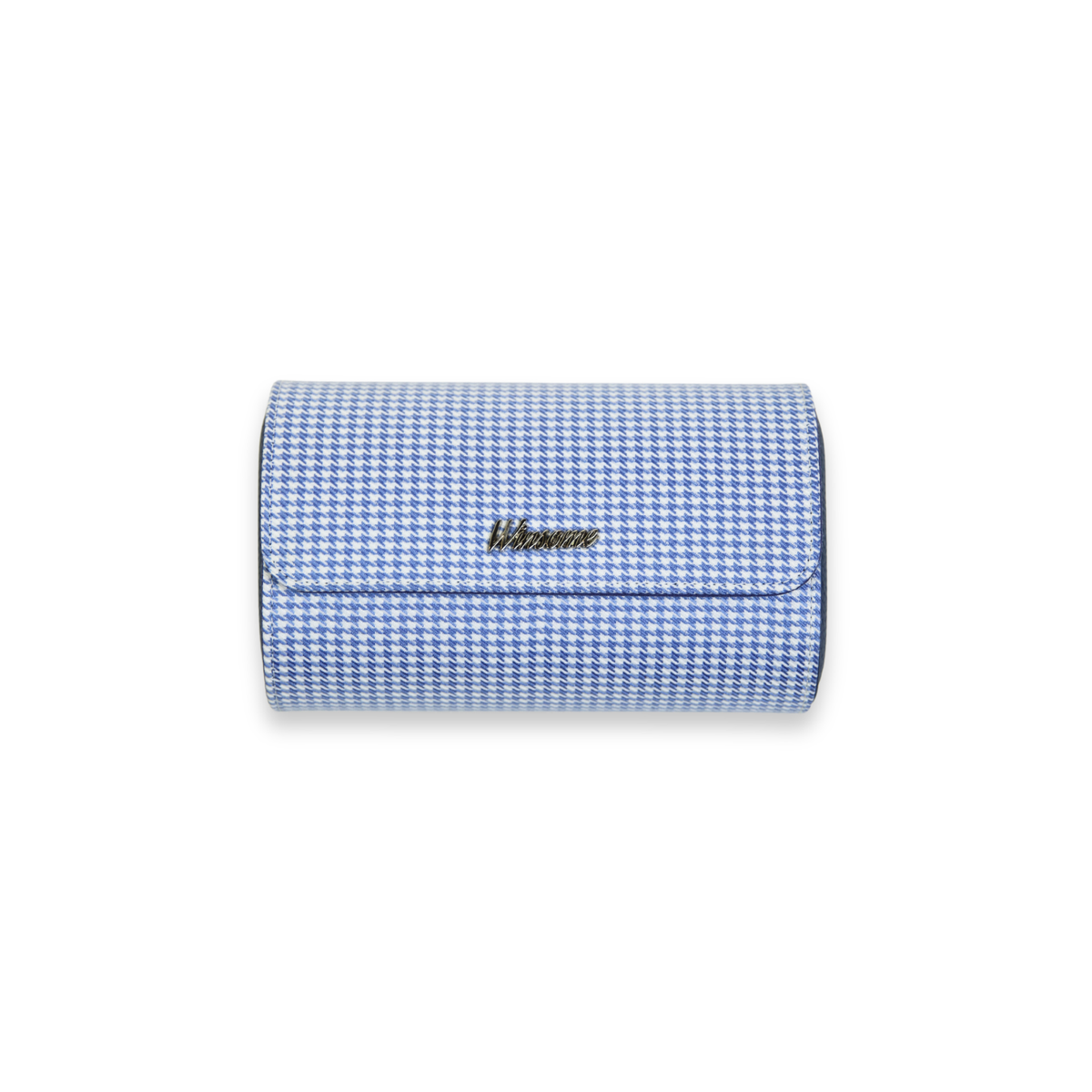
Houndstooth is a two-tone woven pattern made of broken checks with pointed corners, said to resemble a dog's back tooth. Traditionally it is woven in a twill, with alternating bands of dark and light threads running in both directions, so the pattern is built into the fabric rather than printed on top of it. Classic houndstooth is black and white, but it works in almost any pair of contrasting colors: crimson and cream, blue and white, brown and ivory.
It goes by several names. Dogstooth (or dog's tooth) is common in Britain, and a very small version is sometimes called puppytooth.
Where Houndstooth Comes From
The houndstooth we know today is generally traced to the woven wool tweeds of the Scottish Lowlands, where hard-wearing checked cloth was part of everyday country dress. The idea of a two-tone broken check is far older, though. One of the earliest known examples, the Gerum Cloak, was found preserved in a Swedish peat bog and dates back more than 2,000 years, which makes houndstooth one of the oldest designs still in regular use.
What Is the Pepita Pattern?
Pepita is houndstooth's closest cousin, and the two are often confused. Where houndstooth has its distinctive jagged, four-pointed shapes, Pepita is a smaller and simpler check made of interlocking squares, arranged so they appear to run in diagonal lines. Pepita is also known as shepherd's check.
Its name has a more theatrical origin. The pattern takes its name from Pepita de Oliva, the stage name of a celebrated 19th-century Spanish dancer.
From the Runway to the Racetrack
In the late 1940s, Christian Dior brought these checks into women's fashion with his celebrated “New Look,” a bold move for a pattern that had been associated mainly with menswear. The houndstooth and Pepita family has been a fixture of luxury fashion ever since.
Car enthusiasts know the pattern from a different place entirely. In the early 1960s, Pepita first appeared on the seats of late-model Porsche 356s as a special request, and it soon became an official option on the original 911. It remains one of the most recognizable interiors in motoring history, and Porsche has brought it back again and again, from the 50th anniversary 911 to the 2022 911 Sport Classic. It is so closely associated with those cars that many people still call it houndstooth, even though, strictly speaking, the classic seat fabric is Pepita. We tell that story in the history of Porsche and Porsche 911: The Evolution of an Icon.

Houndstooth vs. Pepita: How to Tell Them Apart
- Houndstooth: larger, jagged four-pointed shapes, often described as looking like small windmills or teeth.
- Pepita: smaller, squarer checks that form diagonal lines across the fabric.
- Both: two contrasting colors, woven rather than printed, and timeless in almost any setting.
Why We Wrapped Our Cases in Houndstooth
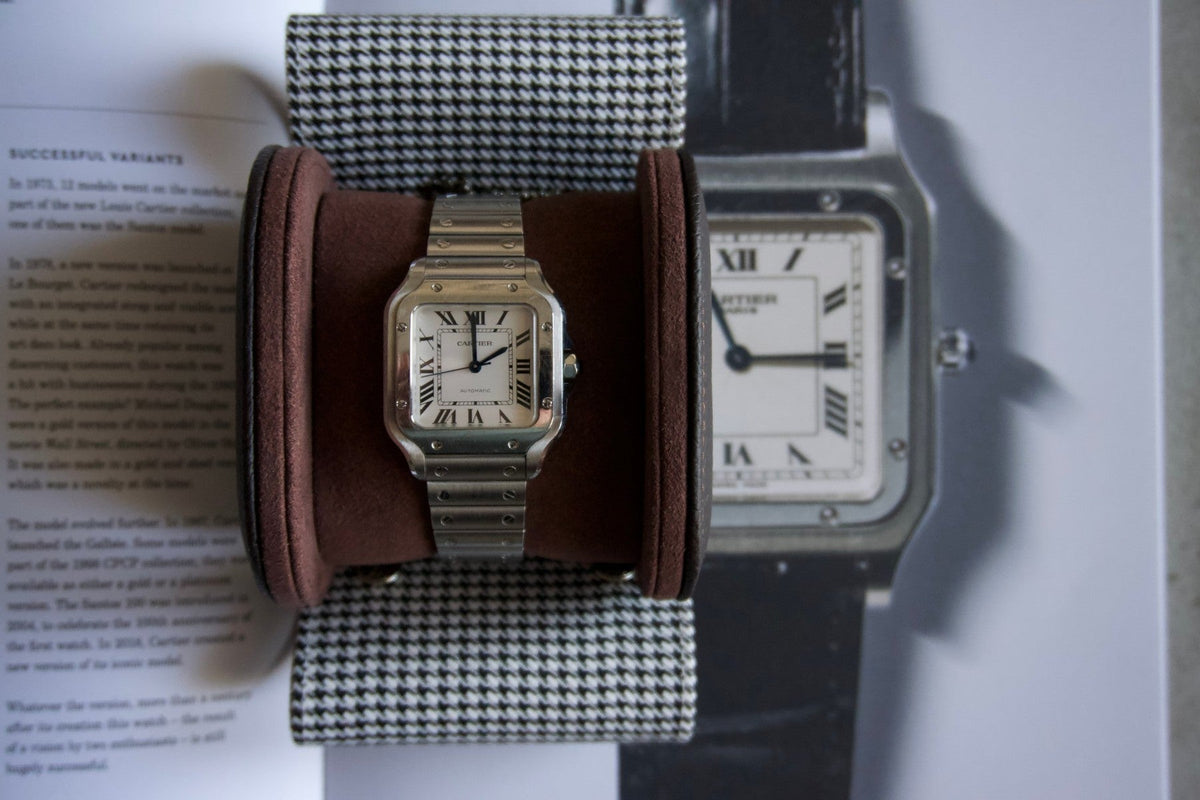
Our family has loved classic cars, and the fabrics inside them, for as long as we have loved watches. Houndstooth felt like the natural choice for a case meant to carry something you intend to keep for decades: a pattern that has already stood the test of time. Every Winsome case is hand cut and hand sewn by skilled artisans, with a suede pillow for each watch inside.
See it in crimson and cream in The Cabernet, in cornflower blue in The Bleuet, and in classic black and white in The Espresso.
Explore Series I, our handmade houndstooth watch rolls.
Made for what you value.
Photographs by Winsome, used for editorial purposes. Winsome is not affiliated with Porsche.