
The History of Rolex: How an Icon Was Built
Few names in watchmaking are as instantly recognizable as Rolex. The crown on the dial has become shorthand for precision, achievement and luxury, and watches such as the Submariner, Datejust, GMT-Master and Daytona have become icons in their own right.
But Rolex did not begin as a centuries-old Swiss watchmaker. Its story began in London in the early 20th century, with a young entrepreneur who believed the future of timekeeping belonged on the wrist.
The Beginning of Rolex
In 1905, at just 24 years old, Hans Wilsdorf founded a watch distribution company in London.
At the time, the pocket watch was still the standard for men, and wristwatches had a reputation for being less accurate and less dependable. Wilsdorf believed that could change. He sourced small, highly precise Swiss movements and focused on wristwatches that combined elegance with reliability.
In 1908, Wilsdorf registered the name Rolex in Switzerland. By his own account, he had experimented with hundreds of letter combinations before the name came to him on the upper deck of a horse-drawn omnibus in London. Short, easy to pronounce in any language and distinctive on a dial, it would become one of the most recognizable trademarks in the world.
Precision Comes First
Before Rolex became associated with explorers, racing drivers and luxury, Wilsdorf concentrated on something more fundamental: accuracy.
In 1910, a Rolex became the first wristwatch to receive the Swiss Certificate of Chronometric Precision, awarded by the Official Watch Rating Centre in Bienne. Four years later, Britain's Kew Observatory gave a Rolex wristwatch a Class A precision certificate, a level of certification previously reserved for marine chronometers.
The message was clear: a wristwatch did not have to sacrifice precision simply because it was small enough to wear.
In 1919, Rolex moved its operations to Geneva, and Montres Rolex S.A. was registered there the following year.
The Oyster Changes the Wristwatch
One of the biggest challenges facing early wristwatches was simple: the movement was exposed to dust, moisture and water.
Rolex's answer arrived in 1926 with the Oyster, a hermetically sealed case designed to protect the movement. Rather than simply telling customers the watch could handle water, Wilsdorf set out to prove it.
In 1927, English swimmer Mercedes Gleitze wore a Rolex Oyster during an attempt to swim the English Channel. After more than ten hours in cold water, she was pulled out short of the French coast, but the watch was still running perfectly. Rolex celebrated with a full-page advertisement on the front of London's Daily Mail.
It was an early example of something Rolex would become exceptionally good at: connecting its watches with real-world achievement.
The Perpetual Movement
In 1931, Rolex patented its Perpetual rotor, a self-winding mechanism that uses the movement of the wearer's wrist to wind the watch automatically. Pairing the waterproof Oyster case with the self-winding Perpetual movement created the foundation of one of the most enduring names in watchmaking: the Oyster Perpetual.
The Datejust and the Rise of the Modern Rolex
In 1945, Rolex introduced the Datejust, the first self-winding wrist chronometer to display the date through a window on the dial. Rolex created the Jubilee bracelet specifically for it.
The Datejust helped establish a design language that is still unmistakably Rolex: practical, refined and recognizable without being extravagant. More than 80 years later, it remains one of the company's signature watches.
Rolex Builds Watches for a Purpose
During the 1950s and 1960s, Rolex introduced a series of watches built around specific professions and pursuits.
The Explorer and Submariner arrived in 1953. The Submariner was designed for diving and was initially water-resistant to 100 meters, while the Explorer was tied to the era of high-altitude exploration and the successful Everest expedition that same year.

In 1955 came the GMT-Master, designed so pilots and international travelers could track more than one time zone. It became the official watch of Pan American World Airways.
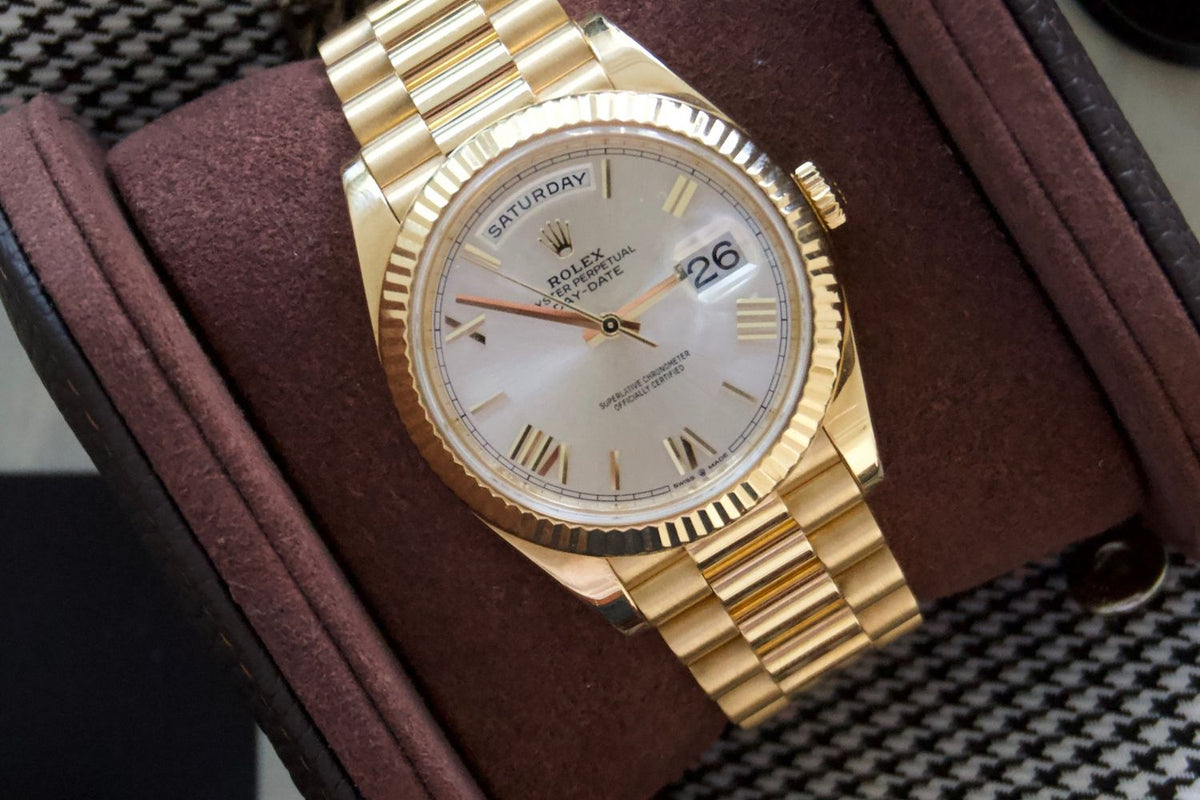
The Day-Date followed in 1956, displaying both the date and the full day of the week. Produced only in precious metals, it became closely associated with business leaders, dignitaries and presidents.

Then, in 1963, Rolex introduced the Cosmograph Daytona. Designed for motor racing, its chronograph and tachymeter bezel let drivers measure elapsed time and calculate average speed.

Diving. Aviation. Exploration. Racing. Instead of making variations of the same watch, Rolex built watches around what people were actually doing.
The Rolex Watches That Became Icons
- Datejust: the classic everyday Rolex, introduced in 1945.
- Submariner: the legendary dive watch, introduced in 1953.
- Explorer: born in the great era of mountaineering, also in 1953.
- GMT-Master: developed in 1955 for the new age of international air travel.
- Day-Date: Rolex's prestigious precious-metal watch, introduced in 1956.
- Cosmograph Daytona: the racing chronograph introduced in 1963.
- Sky-Dweller: introduced in 2012, with a second time zone and an annual calendar, made for international travelers.

The remarkable thing is not simply that these names have survived. It is how recognizable their basic designs remain decades after they were introduced.
More Than a Watch
Part of the appeal of a Rolex is technical. Part is design. And part is what the watch comes to represent to its owner.
A Rolex is often bought to mark something: a career achievement, a milestone birthday, a wedding or a retirement. Over time, the watch becomes connected to the story behind it, which is why collectors take particular care when they store or travel with one. A well-made watch roll keeps a Rolex, or any fine watch, protected whenever it is not on the wrist.

Because the value of a watch often has very little to do with the price on the receipt.
Rolex History FAQ
Who founded Rolex?
Hans Wilsdorf founded a watch distribution business in London in 1905 and was the driving force behind what became Rolex. He registered the Rolex name in Switzerland in 1908.
Is Rolex a Swiss company?
Yes. Rolex began in London, but the company moved to Geneva in 1919, and Montres Rolex S.A. was registered there in 1920.
What was the first Rolex Oyster?
Rolex introduced the Oyster in 1926. Its hermetically sealed case protected the movement from water and dust and became one of the most important developments in Rolex history.
What are the most famous Rolex watches?
The best known include the Submariner, Datejust, GMT-Master, Day-Date, Explorer and Cosmograph Daytona, each developed with a distinct purpose.
When was the Rolex Submariner introduced?
The Submariner was introduced in 1953 as a professional dive watch, initially water-resistant to 100 meters (330 feet).
How should you protect a Rolex when traveling?
A well-designed watch roll or watch travel case helps protect a Rolex from scratches and contact with other watches. Look for a soft interior, secure closures and separate cushions for each watch. Valuable watches are best kept with you in your carry-on rather than in checked luggage.
From Hans Wilsdorf's belief in the wristwatch to the Submariner, Datejust and Daytona, Rolex built its reputation by combining function, precision and recognizable design. More than a century later, that formula remains remarkably intact.
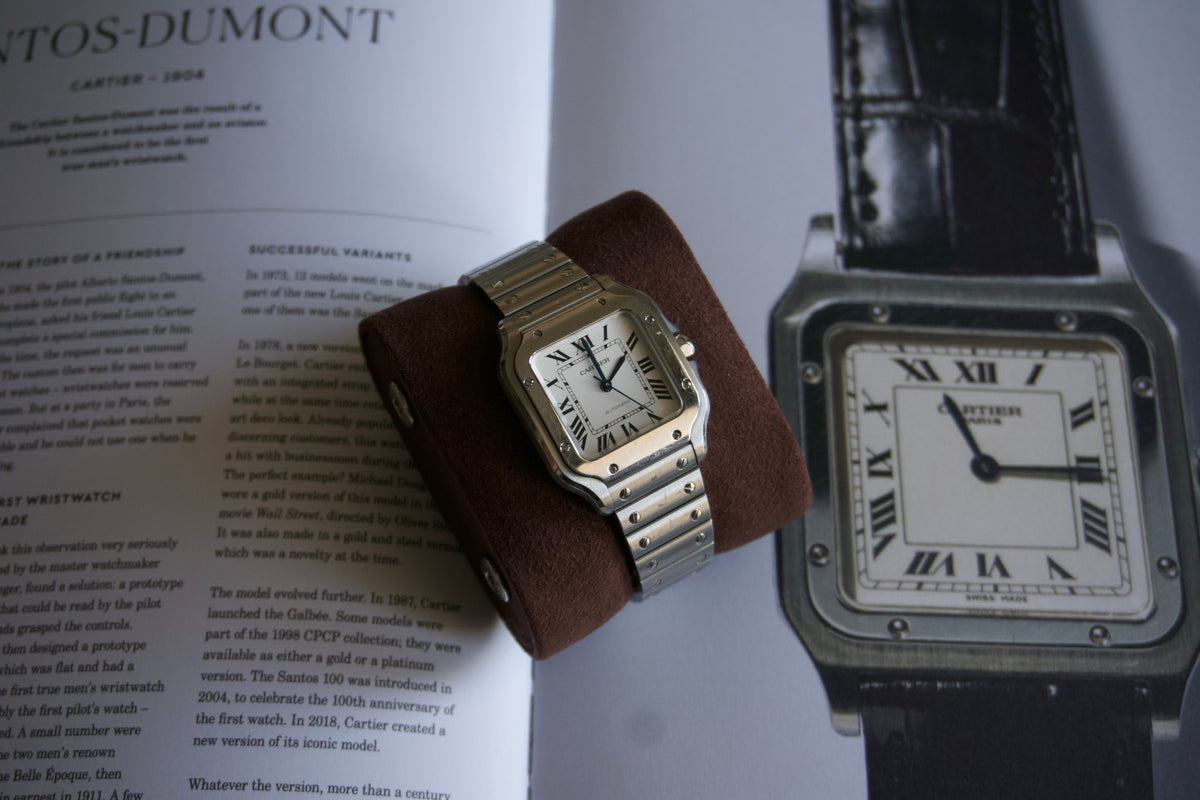
Continue the series with the history of Cartier watches, or explore Series I, our handmade watch rolls.
Made for what you value.
Header image: A yellow gold Rolex Day-Date resting in The Espresso watch roll. All photographs by Winsome. Watch photographs are used for editorial purposes; Winsome is not affiliated with Rolex.