

The History of Patek Philippe: A Tradition of Extraordinary Watchmaking
Among collectors of fine watches, few names carry the same weight as Patek Philippe.
For nearly two centuries, the Geneva watchmaker has built its reputation on complicated mechanical movements, understated design, hand craftsmanship and an unusually strong sense of continuity. From one of the earliest Swiss wristwatches to the elegant Calatrava and the instantly recognizable Nautilus, Patek Philippe has shaped what we now think of as fine watchmaking.
Its story begins in Geneva in 1839.
The Beginning of Patek Philippe
In 1839, Polish-born entrepreneur Antoine Norbert de Patek and watchmaker François Czapek founded Patek, Czapek & Cie in Geneva, producing finely made pocket watches for an increasingly international clientele.
A few years later, Patek met the man whose name would join his own. At an industrial exhibition in Paris in 1844, he encountered French watchmaker Jean Adrien Philippe, who had developed a way to wind and set a watch with the crown instead of a separate key. When most watches still needed a key, it was a significant improvement.
Philippe joined Patek in Geneva the following year, and in 1851 the company became Patek, Philippe & Cie.
Royal Recognition
Patek and Philippe set out to combine technical excellence with exceptional craftsmanship, and their work quickly drew attention beyond Switzerland. At London's Great Exhibition of 1851, Queen Victoria acquired a Patek Philippe watch, and the company went on to build a clientele of kings, queens, aristocrats and prominent collectors.
But prestige alone would not define Patek Philippe. Innovation would matter just as much.
One of the First Wristwatches
In 1868, Patek Philippe created a wristwatch for Countess Koscowicz of Hungary, which the company identifies as the first Swiss wristwatch.

At the time, most watches were still carried in pockets, and wrist-worn watches were treated more as jewelry than as everyday timepieces. The 1868 watch showed something that would grow more important over the following decades: sophisticated watchmaking could move to the wrist without giving up elegance. You can read more about that shift in our history of wristwatches.
A Tradition of Complicated Watches
Patek Philippe became especially known for complications, functions that go beyond hours, minutes and seconds. Calendars, chronographs, moon phases and minute repeaters all demand an extraordinary degree of mechanical precision.
In 1925, Patek Philippe produced what it identifies as the first known perpetual calendar wristwatch. A perpetual calendar accounts for months of different lengths and for leap years, so the date rarely needs correcting by hand. Fitting mechanisms like this into elegant watches became one of the company's defining strengths.

The Stern Family and a New Chapter
In 1932, during the Great Depression, brothers Charles and Jean Stern, whose company supplied dials to Patek Philippe, acquired the manufacture. The Stern family has guided it ever since. Thierry Stern, the fourth generation, has served as president since 2009.
That continuity is unusual among major luxury companies. And the same year the Sterns took over, Patek Philippe introduced one of its most important designs.
The Calatrava
Introduced in 1932, the Calatrava Reference 96 embodied a quieter kind of luxury. Instead of elaborate decoration, it relied on restrained proportions, a round case and a clean dial influenced by the Bauhaus idea that form should follow function. It was elegant precisely because it was simple.

More than 90 years later, the Calatrava remains one of Patek Philippe's defining collections and one of the classic dress watches in fine watchmaking.
Mechanical Complexity Taken to an Extreme
In 1933, Patek Philippe completed the famous Henry Graves Jr. Supercomplication, commissioned by the American banker and collector. The pocket watch contained 24 complications and roughly 900 components, and it stood as one of the great achievements of mechanical watchmaking for decades.
That pursuit continued with the Calibre 89 in 1989 and, eventually, the Grandmaster Chime. Introduced in 2014 to mark Patek Philippe's 175th anniversary, the Grandmaster Chime has 20 complications and is among the most complicated wristwatches the company has ever made.
The Nautilus Changes the Look of Patek Philippe
For much of its history, Patek Philippe was associated with precious-metal dress watches. Then came 1976.
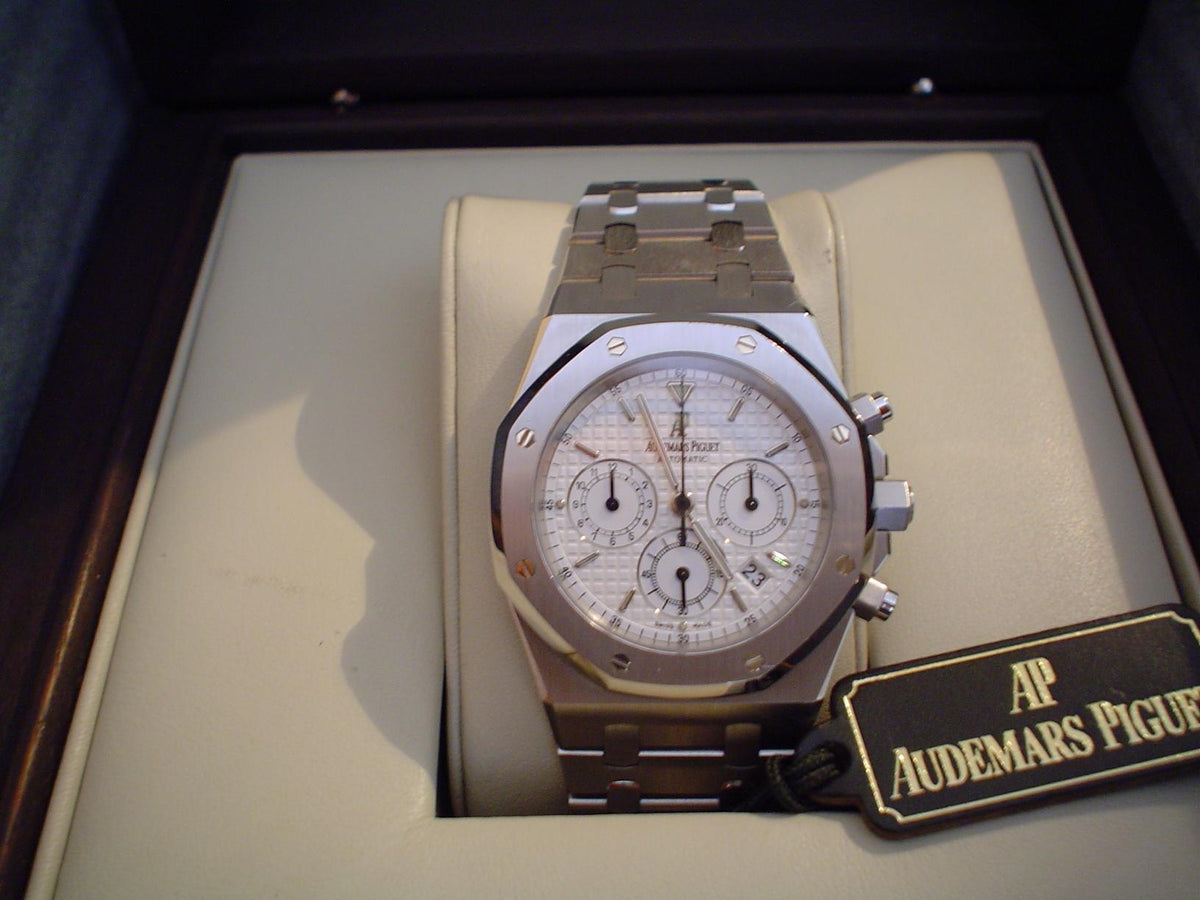
That year, Patek Philippe introduced the Nautilus, a luxury sports watch with an integrated bracelet and a rounded octagonal case inspired by a ship's porthole. It was designed by Gérald Genta, who had created the Audemars Piguet Royal Oak four years earlier.

It looked very different from a traditional Patek Philippe, and that was the point. The Nautilus proved that a high-end mechanical watch could be sporty, casual and luxurious at the same time, and it has become one of the most recognizable luxury sports watches in the world.
The Aquanaut
Patek Philippe expanded its sportier side again in 1997 with the Aquanaut. Its rounded octagonal case echoed the Nautilus, but an embossed dial and a durable composite strap gave it a more contemporary look. Patek Philippe describes it as an expression of casual elegance, a less formal take on its traditional approach.

Patek Philippe Watches That Became Icons
- Calatrava: the classic round dress watch, introduced in 1932.
- Nautilus: the luxury sports watch, introduced in 1976.
- Aquanaut: the contemporary sports collection, introduced in 1997.
- Complications: watches with functions such as annual calendars, chronographs and world time.
- Grand Complications: the most technically sophisticated pieces, including perpetual calendars, minute repeaters and the Grandmaster Chime.
Each reflects the same emphasis on mechanical watchmaking and carefully considered design.
More Than a Luxury Watch
A Patek Philippe is rarely bought simply to tell the time. For collectors, these watches represent craftsmanship, history and continuity. Some mark an important accomplishment. Others become heirlooms meant to stay in a family for decades.
That makes protecting one especially important. When traveling with a Patek Philippe, or any fine watch, a quality watch roll helps prevent scratches and contact with other watches, holding the piece securely without adding bulk.
A watch designed to last for generations deserves to be treated accordingly.
Patek Philippe History FAQ
When was Patek Philippe founded?
The company traces its beginnings to 1839, when Antoine Norbert de Patek and François Czapek founded Patek, Czapek & Cie in Geneva. Jean Adrien Philippe later joined Patek, and the company became Patek, Philippe & Cie in 1851.
Who were Patek and Philippe?
Antoine Norbert de Patek was a Polish-born entrepreneur who settled in Geneva. Jean Adrien Philippe was a French watchmaker known for developing keyless winding and setting. Together, they combined entrepreneurship with technical watchmaking.
Did Patek Philippe make one of the first wristwatches?
Yes. In 1868, Patek Philippe created a wristwatch for Countess Koscowicz of Hungary, which the company describes as the first Swiss wristwatch.
What are the most famous Patek Philippe watches?
The best known include the Calatrava, Nautilus and Aquanaut, along with the Complications and Grand Complications collections.
When was the Patek Philippe Nautilus introduced?
The Nautilus was introduced in 1976. Designed by Gérald Genta, its rounded octagonal case and horizontally embossed dial remain defining features of the collection.
Is Patek Philippe still family owned?
Yes. The Stern family has controlled Patek Philippe since 1932, and Thierry Stern, the fourth generation, has been president since 2009.
How should you protect a Patek Philippe when traveling?
A well-made watch roll or travel case keeps a Patek Philippe separated from other watches and helps protect it from scratches. Look for a soft interior, a secure closure and properly sized cushions, and keep valuable watches in your carry-on rather than checked luggage.
From Jean Adrien Philippe's keyless winding system to the understated Calatrava and the unmistakable Nautilus, Patek Philippe has spent nearly two centuries combining tradition with innovation. Its watches have changed considerably. Its philosophy has not.
Continue the series with the history of Audemars Piguet, or explore Series I, our handmade watch rolls.
Made for what you value.
Header image: Patek Philippe Nautilus Travel Time Chronograph in rose gold. Photo: Winsome. Watch photographs are used for editorial purposes; Winsome is not affiliated with the brands discussed.