
The History of Porsche: From the 356 to the 911 and Beyond
Few automobiles are recognizable from a silhouette alone. A Porsche 911 is one of them. Its round headlights, sloping roofline and rear-engine proportions have evolved for more than six decades without losing the basic shape that made the original distinctive.
And few car interiors are as recognizable as a classic Porsche seat trimmed in Pepita, the black-and-white check most people call houndstooth.
But the history of Porsche began well before the 911, and even before Porsche built a car carrying its own name. It began with an engineering office in Stuttgart in 1931.
The Beginning of Porsche
On April 25, 1931, automotive engineer Ferdinand Porsche established an independent engineering and design company in Stuttgart, Germany. He was already accomplished, with earlier work spanning electric and gasoline-electric cars around the turn of the century, racing cars and vehicles for several major European manufacturers.
The new company was not created to build Porsche automobiles. It was an engineering business, and its early projects included vehicles for Wanderer and Zündapp, the powerful Auto Union Grand Prix racing cars and the development work that produced the Volkswagen later known as the Beetle.
A Complicated Chapter
The company's history in the 1930s and during World War II is inseparable from Germany's National Socialist period. Ferdinand Porsche's engineering office worked closely with the German government on projects including the Volkswagen and, during the war, military vehicles. Porsche's own historical research also documents the company's use of forced labor during this period.
After the war, the company faced a very different future, and it was Ferdinand's son, Ferry Porsche, who would turn the family engineering business into the sports car company we know today.
The First Porsche: The 356
Ferry Porsche had a straightforward idea: a sports car that combined light weight, responsive handling, useful performance and enough practicality to enjoy on the road. When he couldn't find one, he built it.
The result was the Porsche 356 No. 1 Roadster. Built in Gmünd, Austria, the lightweight two-seater received its road certification on June 8, 1948, becoming the first automobile to officially carry the Porsche name. The first 356 used a mid-engine layout, but production versions soon adopted the rear-engine arrangement that became a Porsche hallmark.

The 356 was simple, compact and light. More importantly, it established an idea Porsche would refine for generations: performance isn't only about horsepower. Balance, steering, braking, weight and the way a car communicates with its driver matter just as much.

The Porsche 911
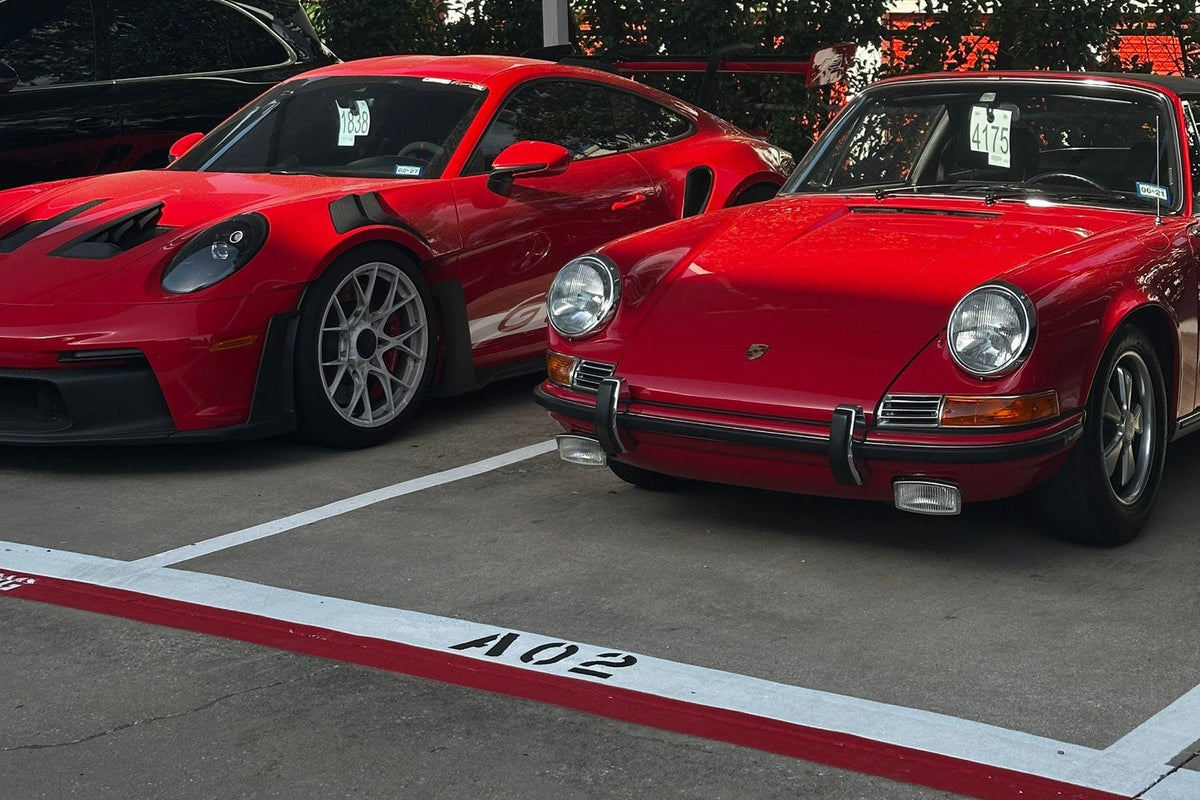
By the early 1960s, Porsche needed a successor to the 356. Ferry Porsche's son, Ferdinand Alexander “Butzi” Porsche, and the design team developed a new car that kept the 356's philosophy while adding power, space and refinement.
Porsche unveiled it at the Frankfurt International Motor Show on September 12, 1963. At first it wasn't called the 911. It was the Porsche 901. When Peugeot objected, citing its rights to three-digit model names with a zero in the middle, Porsche renamed the production car the 911. Production began in 1964, with a rear-mounted, air-cooled flat-six producing 130 PS.
But the car's real significance went beyond the engine. Porsche had created a shape and an engineering concept that could evolve without being replaced. More than 60 years later, that idea is still at the heart of the company. We trace every generation in Porsche 911: The Evolution of an Icon.

Pepita: Porsche's Heritage Houndstooth
Ask a classic Porsche enthusiast to picture an early 911 interior and there's a good chance they'll describe the seats: black-and-white check cloth framed in leather. Porsche calls the pattern Pepita.
Pepita belongs to the same family of two-tone woven checks as houndstooth, and the two are so often confused that most people simply call the Porsche fabric houndstooth. Purists will point out the difference: true houndstooth has larger, jagged, four-pointed shapes, while Pepita, also known as shepherd's check, is a smaller, squarer check whose blocks appear to run in diagonal lines. Porsche says the name was inspired by Pepita de Oliva, the stage name of a celebrated 19th-century Spanish dancer, and that Christian Dior helped carry the pattern from menswear into high fashion with his 1947 “New Look” collection.
It first appeared at Porsche in the early 1960s, as a special request on the seats of late-model 356s. When the 911 arrived, Porsche made it official: Pepita became an option in the original 911's equipment catalog, and from 1966 customers could choose the traditional black and white or versions woven in black, red and white or black, brown and white. It appeared on seat centers, door panels and even the linings of the luggage compartment and glove box. The oldest 911 in the Porsche Museum, chassis number 57, built when the car was still called the 901, was restored with Pepita seat centers.

Pepita was soon joined by other patterned fabrics, including the bold Tartan of the 1970s 911 Turbo and the op-art Pasha check introduced in 1977, but none became as closely tied to the brand's identity. Porsche itself calls it “a signature Porsche feature.”
The pattern never really went away. Porsche brought it back for the 911's 50th anniversary edition in 2013, used it for the one-millionth 911 in 2017, which was trimmed in the style of Ferry Porsche's own first 911 company car, and gave it a starring role in the 2022 911 Sport Classic, limited to 1,250 cars worldwide. It remains one of the most requested materials in Porsche's Exclusive Manufaktur special-request program, and in 2024 Porsche made a modern, recycled-fiber version of Pepita the standard fabric for its leather-free interiors.
Six decades on, a few square inches of black-and-white check still say “classic Porsche” as clearly as the 911's silhouette.
Racing Becomes Part of Porsche
Motorsport was never just a marketing exercise for Porsche. Racing became part of its engineering process. Porsche competed in endurance racing, hill climbs and rallying, developing technology under demanding conditions and applying the lessons to its road cars.
One car came to symbolize that ambition more than almost any other: the Porsche 917. Developed at extraordinary speed in the late 1960s, it was initially difficult to control until engineers reworked its aerodynamics and turned it into a dominant racer. In 1970, Hans Herrmann and Richard Attwood won the 24 Hours of Le Mans in a 917 KH, Porsche's first overall victory there. The 917 won again in 1971, cementing a relationship with endurance racing that continues today.

The 911 Carrera RS
In 1972, Porsche introduced one of the most celebrated early 911s, the Carrera RS 2.7. Built partly so Porsche could homologate the 911 for racing, it emphasized lower weight, more power and better aerodynamics, including its famous “ducktail” spoiler.
Its name revived an important word in Porsche history. Carrera, Spanish for “race,” had been used after Porsche's success in the Carrera Panamericana road race in Mexico, and it remains part of the 911 family today. So does the RS philosophy: remove what isn't necessary, and improve what matters.

Porsche Discovers Turbocharging
Racing also led Porsche to a technology that would transform its road cars. After success with turbochargers in competition, Porsche adapted them for the 911. The production 911 Turbo, known internally as the 930, was unveiled in 1974 and reached customers in 1975. Its 3.0-liter turbocharged flat-six made 260 PS, making it one of the fastest production cars of its era.
With its widened body, prominent rear spoiler and explosive acceleration, the Turbo became another Porsche icon, and within Porsche the word itself became shorthand for the highest level of performance.
The Boxster Helps Renew Porsche
By the early 1990s, Porsche was under substantial financial pressure and needed new products and more efficient manufacturing. One answer was the Boxster. First shown as a concept at the 1993 Detroit Auto Show, the production car arrived in 1996 with a mid-mounted flat-six and an open top, a return to the idea of a compact, relatively accessible two-seat sports car.
The Boxster shared components with the upcoming 996-generation 911, simplifying production and reducing costs. The strategy worked. It became an important part of Porsche's recovery and eventually led to the Cayman coupé.
The Cayenne Changes Porsche Again
Then Porsche did something many enthusiasts considered unthinkable. It built an SUV. The Cayenne debuted in 2002 as the company's first SUV and its third model line alongside the 911 and Boxster.
Some traditionalists objected loudly, but commercially it was enormously important. The Cayenne brought in new customers, expanded Porsche's global reach and became a major financial success. It also proved something Porsche had learned before: it could expand beyond the classic sports car formula, provided the new vehicle still behaved like a Porsche.
Electricity Arrives: The Taycan
The next fundamental change came in 2019 with the Taycan, Porsche's first fully electric production sports car. Rather than treating an electric car as an exercise in efficiency, Porsche focused on repeatable performance, handling, braking and high-speed capability, built around an 800-volt electrical architecture that allows very fast charging.
The power source was entirely new. The philosophy was familiar. That has been the recurring challenge throughout Porsche history: change the technology without losing the character.
Porsche Models That Became Icons
- 356: the first production sports car to carry the Porsche name.
- 911: introduced as the 901 in 1963 and the defining Porsche for more than six decades.
- Carrera RS 2.7: one of the most collectible early performance 911s.
- 917: the race car that brought Porsche its first overall win at Le Mans.
- 911 Turbo: the road car that brought racing-developed turbocharging to a new generation.
- Boxster: the mid-engine roadster that helped drive Porsche's 1990s resurgence.
- Cayenne: the SUV that broadened Porsche's customer base and transformed its scale.
- Taycan: Porsche's first fully electric production sports car.
The vehicles are very different. The engineering philosophy connecting them is remarkably consistent.
Why Porsche Endures
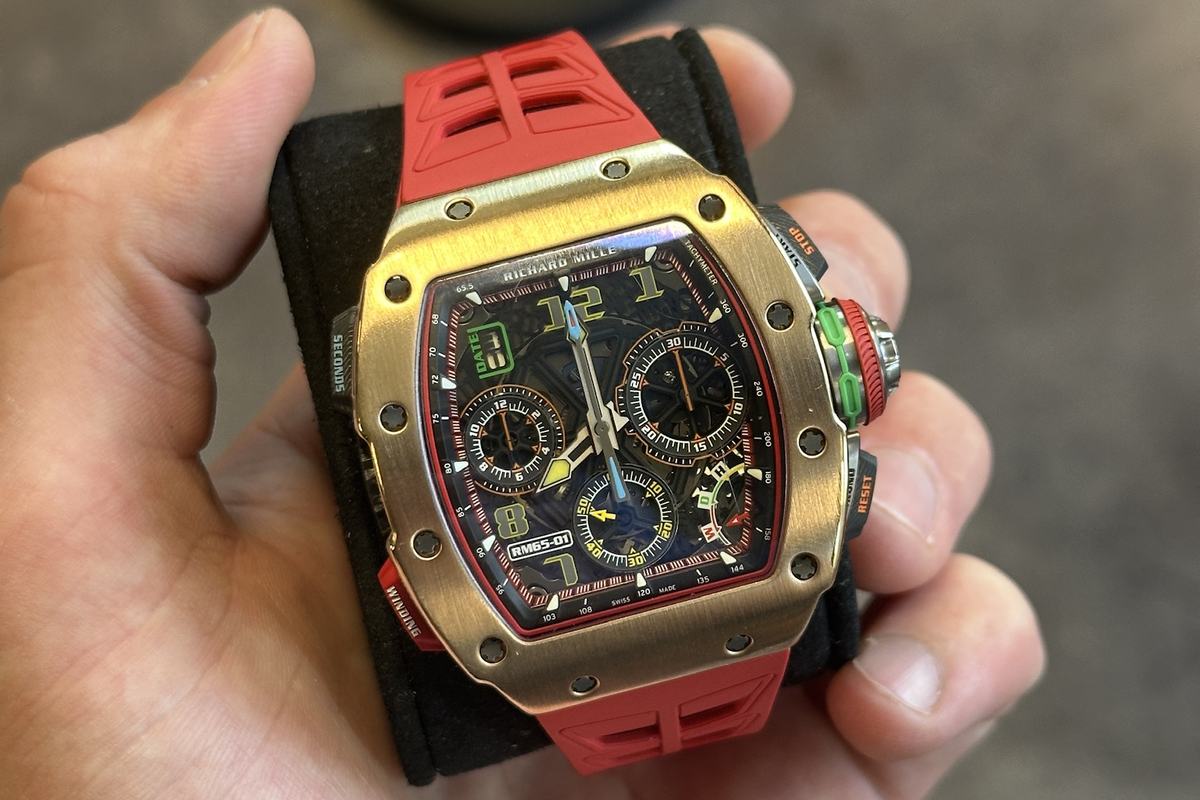
There is a reason Porsche appeals to many of the same people who appreciate fine mechanical watches. Both are objects where engineering and emotion overlap. No one needs a mechanical watch to know the time, and few people need a Porsche simply to get from one place to another. The attraction lies beyond basic function: the sound, the steering, the shape, the mechanical details, the history, and the feeling of using something engineered with unusual care.

That is why certain Porsches become more meaningful as they age rather than simply becoming old cars. Owners remember where they drove them. Collectors hunt for particular generations and specifications. Some are restored, others preserved exactly as they were, and many are eventually passed from one generation to the next. Collectors treat a fine watch the same way.
Why Series I Is Wrapped in Houndstooth
We have loved classic cars, and the details inside them, for as long as we have loved watches. Few details are as evocative as a houndstooth-style check stretched across the seat of an early 911. It is a fabric that has already proven it can outlast every trend, which is exactly what you want wrapped around something you plan to keep for decades.
That is why every watch roll in Series I is wrapped in our signature houndstooth. The Espresso comes in the classic black and white, the same palette as the original Pepita seats of the 1960s. The Cabernet pairs crimson with cream, and The Bleuet is woven in cornflower blue. Inside, each watch rests on its own suede pillow, and every case is hand cut and hand sewn by skilled artisans. For more on the pattern itself, read Houndstooth, Pepita and Dogstooth: The Story of a Timeless Pattern.
Winsome is not affiliated with Porsche. We simply share an appreciation for engineering, heritage and a pattern that never seems to age.
Porsche History FAQ
When was Porsche founded?
Ferdinand Porsche founded his engineering office in Stuttgart in 1931. The Porsche sports car brand effectively began in 1948, when the 356 No. 1 became the first automobile to carry the Porsche name.
Who founded Porsche?
Ferdinand Porsche founded the engineering company in 1931. His son, Ferry Porsche, created the first Porsche-branded sports car, the 356, and built Porsche into a car manufacturer.
What was the first Porsche?
The Porsche 356 No. 1 Roadster, which received its road certification on June 8, 1948.
When was the Porsche 911 introduced?
Porsche unveiled the car, originally called the 901, at the Frankfurt International Motor Show on September 12, 1963. Production began in 1964, and it was renamed 911 after Peugeot objected to the 901 name.
What is the houndstooth pattern on Porsche seats called?
Porsche calls it Pepita. It is a small two-tone check closely related to houndstooth and often described as houndstooth. It first appeared on late 356s in the early 1960s and became an official option on the original 911.
Does Porsche still offer Pepita seats?
Yes. Pepita has appeared on special models such as the 2013 50th anniversary 911 and the 2022 911 Sport Classic, remains available through Porsche Exclusive Manufaktur, and became the standard fabric for leather-free interiors in 2024.
When did Porsche first win Le Mans?
Porsche's first overall victory at the 24 Hours of Le Mans came in 1970, when Hans Herrmann and Richard Attwood won in a 917 KH.
What was Porsche's first electric production car?
The Taycan, introduced in 2019, was Porsche's first fully electric production sports car.
From Ferdinand Porsche's engineering office to Ferry Porsche's 356, the enduring 911, victories at Le Mans and the move to electric performance, Porsche's history has been defined by continual evolution. The technology changes. The shape evolves. But the pursuit, and even the pattern on the seats, remains remarkably familiar.
Explore Series I, our handmade houndstooth watch rolls.
Made for what you value.
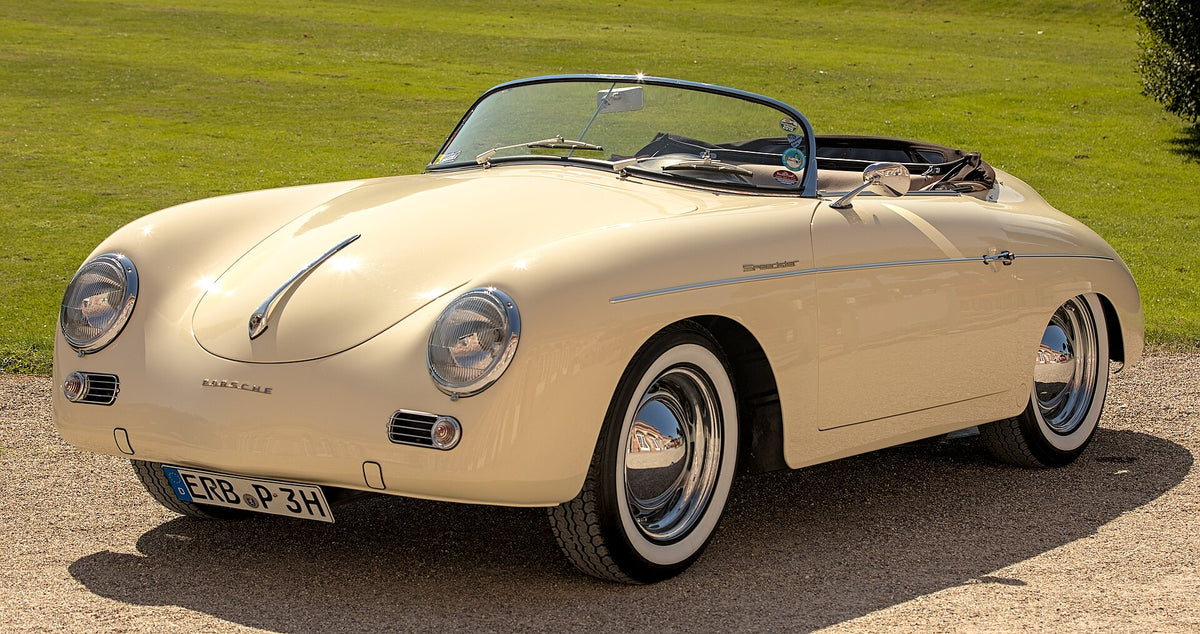
Header image: A Porsche 356 A Speedster at the Classic-Gala, 2021. Photo: Alexander Migl / Wikimedia Commons / CC BY-SA 4.0. Photographs are used for editorial purposes; Winsome is not affiliated with Porsche.